Thứ Năm, 25 tháng 12, 2014

Buddhist legend in Keo Pagoda

The legend...

Come back to the history, legend said that a humble fisherman in the 11th century achieved enlightenment as a Buddhist monk and could thereby fly through the air, walk on water and tame snakes and tigers. However, the holy man Duong Khong Lo (1016-1094) secured his name firmly in his country’s history books when he used his magic powers to cure King Le Thanh Tong (1066-1127) of a terrible disease. Over 900 years later, residents of Vu Nhat Commune, Vu Thu District, Thai Binh Province still honour the Buddhist hero with a festival as mystical as the legend it recognises. Vietnam tours

The features
The flocks of visitors who come to witness the Autumn Festival, the province’s biggest cultural event of the year, have no trouble finding Keo Pagoda, located on the site where the Buddhist dignitary had pagoda built in the 17th Century. 5 reasons to have a Halong Bay overnight trip
Buddhist legend in Keo Pagoda

Keo pagoda is architecturally unique and stands at a scenic spot on the Red River Delta. The Pagoda is home to a wealth of ancient relics, from intricately engraved wooden dragons to a collection of over 100 statues. The pagoda also has valuable antiques including a pair of candlesticks from the Mac Dynasty, pottery ware and altars from the Le Dynasty, imperial boats and more, which are all as well preserved now as they were during the time of the Le Trung Hung Dynasty in 16th century. Vam Ho Bird Sanctuary

The yearly festival is celebrated from 13th to 15th of the ninth lunar month, 100 days after the death of the Buddhist dignitary Duong Khong Lo. The festival features religious and traditional rituals and customs held in celebration of the Buddhist monk who rendered great merits to the people and the country. The festival also hosts different traditional cultural activities reflecting the life style, which is imbued with traits of the Red River Delta’s agricultural culture.

The celebration

The pagoda’s own mythical appeal plays a significant role in drawing so many visitors to Vu Nhat Village each year on the 13th, 14th and 15th days of the ninth lunar month. Normally, people visit the commune to offer prayer at the Keo Pagoda in honor of the Buddhist monk. Similar to other Vietnam festivals and events, Keo Pagoda Festival commences with a procession of palanquin to remind people of the anniversary of Khong Lo’s death, followed by a boat race and a literary recital competition during the day. When night falls, it's time for music and a trumpet and drum competition, light from the main shrine illuminates preparations for the next day’s procession, prayers are offered until midnight.

On the 14th day of the ninth lunar month, in celebration of the birth anniversary of monk Khong Lo, in the morning, the procession ceremony comes after the incense-offering ritual. A carriage pulled by two pairs of white and pink wooden horses head the procession, accompanied by 8 flag bearers and 42 men carrying bat but luu bo, a classical Vietnamese weapon. Four people wearing black gauze outfits and white trousers, who carry a dragon in commemoration of Khong Lo’s journey by boat to the capital of the kingdom to treat King Ly Nhan Tong. Four people in the same outfit carrying a small gilded boat put in a stand, depicting the period of monk Khong Lo’s life when he was a fisherman. In the afternoon, at Gia Roi shrine, the mua ech vo (frog-catching dance) ritual pays respect to the gods, while incense is offered to Buddha.

The festival continues into the next day with further entertainment and traditional games such as duck catching, rice cooking competition and firecracker hurling competition. However, the most interesting performance that attracts a large number of tourist is the  boat rowing dance on land which is performed by 12 people in fine costumes, standing in two parallel lines like the way they sit in the boat. As one performer beats a small drum and another holds a wooden fish, the 12 performers "row" while flexing their legs and calling out rhythmically. This performance also puts an end to the three-day Keo Pagoda Festival.

It is believed that together with this meaningful festival, Keo Pagoda will remain an interesting tourist attraction and a pride for Vietnamese architects, Vu Nhat villagers and all of Thai Binh Province – as well as our whole country!

Thứ Hai, 15 tháng 12, 2014

Halong Bay Vietnam

Geographical position

Situated in the north-east region of Viet Nam, Halong Bay is a part of Bac Bo Gulf and comprises the sea area of Halong City, Cam Pha Town and a part of Van Don island district, Quang Ninh Province. It borders Cat Ba Island to the south-west, the mainland to the west with a 120km-long coastline.

Natural Beauty

Halong Bay covers a total area of 1,553km², including 1,969 islands of various sizes, 989 of which have been given names. There are two kinds, limestone and schist, which are concentrated in two main zones: the south-east (belonging to Bai Tu Long Bay) and the south-west (belonging to Halong Bay). The average geological age of the islands is between 250 and 280 million years old.  Halong bay tours

Halong Bay has been called by the great national poet Nguyen Trai: "a marvel of the earth erected towards the high skies". While exploring the bay, tourists will feel lost in a legendary world of stone islands which shapes change depending on the angle and the light. There are many names given to islands according to their shapes and forms such as Hon Dau Nguoi (Human Head Islet), Hon Rong (Dragon Islet), Hon Canh Buom (Sail Islet), Hon Trong Mai (Cock and Hen Islet)… But the beauty of Halong Bay does not consist only in the forms of its mountains, islands and the colour of its waters, but also in its infinitely rich system of grottoes and caves such as: Thien Cung (Heavenly Palace Grotto), Dau Go (Driftwood Grotto), Sung Sot (Surprise Grotto), Tam Cung (Three Palace Grotto), Trinh Nu (Virgin Grotto)…. Each is a grandiose and refined natural architectural creation.
Halong Bay Vietnam
Halong Bay Vietnam
 
Geological value

The most remarkable geological events of Halong Bay’s history in the last 1,000 years include the advance of the sea, the raising of the bay area and the strong erosion that has formed coral and pure blue and heavily-salted water. This process of erosion by sea water has deeply engraved the stone, contributing to its fantastic beauty. Present-day Halong Bay is the result of this long process of geological evolution that has been influenced by so many factors. It is because of all these factors that the tourists now visiting Halong Bay are not only treated to one of the true wonders of the world, but also to a precious geological museum that has been naturally preserved in the open air for the last 300 million years.

Value of biological diversity

Results of scientific research show that Halong Bay features ecosystems of a tropical ocean region such as ecosystem of coral reefs with 232 species of coral distributed mainly in the areas of Cong Do and Bo Hung. It is also home to 81 species of gastropoda, 130 species of bivalvia, 55 species of polycheta and 57 species of crab. The ecosystem of salt water-flooded forests chiefly concentrated in the zones of Tuan Chau, Cua Luc and Ba Che has the most diversified collection of species of salt water-flooded plant in North Vietnam. Also living in this ecosystem are a great many species of animals: migrating birds (200 species), polycheta (169 species), seaweed (91 species), reptile (10 species). Halong Bay also has ecosystem of tropical rain forests with various rare and precious creatures: deer, weasels, squirrels and in particular, white-tabby and red-haired monkeys. In addition, there is a system of small caves along the sea, which are the living and development places for many animals and plants: seaweed, water plant, algae, fish and shrimp. Deeper into the water, there are also many species of shrimp, fish, abalone and other sea-specialities.

Historical and cultural value

Halong is a place closely linked to Vietnam’s history with such famous geographical names as: Van Don (site of an ancient commercial port); Poem Mountain (with engravings of many poems by emperors and other famous people of the past); and Bach Dang River (the location of two fierce naval battles fought against foreign aggressors). This is not all, Halong has been proven by scientists to be one of the first cradles of human existence in the area, with such archaeological sites as Dong Mang, Xich Tho, Soi Nhu and Thoi Gieng…

On December 17, 1994, Halong Bay was recognised as world natural heritage for its natural beauty at the 18th meeting of the World Heritage Committee of UNESCO in Thailand. On December 12, 2000, Halong Bay was recognised as world natural heritage for the second time based on its geological value at the 24th meeting of the World Heritage Committee of UNESCO in Cairns, Australia. The recognised site covers an area of 434km², comprises 775 islands and forms a triangle: with Dau Go Island (Driftwood Grotto) to the west; Ba Ham Lake (Three Shelter Lake) to the south and Cong Tay Island to the east.

Thứ Hai, 8 tháng 12, 2014

Halong Ginger cruise

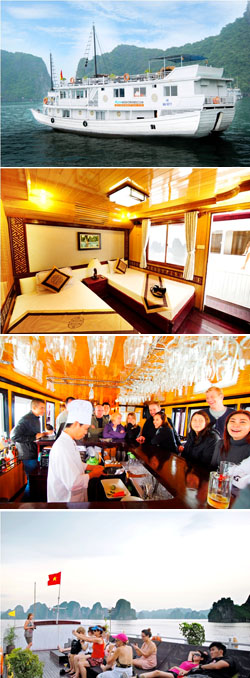
The Halong Ginger cruise is the perfect mix of classical and modern. It has three decks, that shine polished wood under its golden sails. With two bars, a restaurant, and a luxurious spa, this cruise are perfect to unwind and relax while taking in the beauty of the Halong Bay.

Watch the islands pass by the blue shimmering waters while you sail towards Cua Van, the oldest and largest fishing village in Halong Bay. There are a lot of good reasons to choose Halong Ginger for your cruise of Halong Bay, one of which being the exquisite beauty of the boat itself. Tours to Vietnam

Itinerary
Halong Ginger cruise

After getting picked up in Hanoi, if you opted for that, you will be taken to Halong Bay where you will find the Halong Ginger in all its glory.

The ship will set sail as passengers are served a lunch. During the days you can cruise the bay and the beaches, or you always have the option of a massage and sunbathing. Along the bay you can go trekking or swimming at Soi Sim Island and then cruising to visit Hang Doi water tunnel with row boat.

There are plenty of caves and mountains to explore before you get back to the Halong Ginger for dinner. Then wake up the next day with Tai Chi ready to explore more of the beautiful the bay has to offer. Visit grottos and fishing villages all along the bay area. There are so many things to see that you certainly won't get bored on the three days and two night option.

Who this cruise is best for:

The Halong Ginger is a good choice for anyone who wants to see the beauty of Halong Bay and its islands. If you have a medical condition, I wouldn't suggest the trecking in the caves. If you are looking to relax, sight see, take in the sun, and do all of that in luxury, the Halong Ginger cruise might just be perfect for you and your family.

Thứ Tư, 26 tháng 11, 2014

Get around Phu Quoc Island

Cycling

Most hotels offer bicycle rentals which start from US$1 per day, which can be a great way to adventure around the local area.

We recommend purchasing a face mask before you head off on these longer journeys and take plenty of water. The coastal strip surrounding Phu Quoc makes cycling relatively easy however the island heats up when you get move from the coast . Visit Phu Quoc with South Vietnam tours

Get around Phu Quoc Island

Motorbike Rental

Renting a motorbike is one of the cheapest ways to discover Phu Quoc Island and motorbikes also provide the best access if you are adventuring out to the more remote beaches and dirt roads beyond the main towns. Mekong & Phu Quoc island

Motorbikes can be rented at many of top end and mid range hotels, or you’ll find local owners outside the hotels and airport very keen to either rent their bikes or even adopt you and guide you around the island. Bikes rental rates will vary depending on the condition of the bike and your bargaining skills, here is guide to prices:

Mekong Off the beaten Path with extension to Cambodia 12 days


Per hour, from around 30,000d

Per day, from US$6-10 dollars a day

Per week, around US$45-50 or less depending if you negotiate any discounts.


Note: since the end of 2007, it is now illegal to ride on a motorbike without wearing a helmet, however local police are generally lenient towards tourists. If you are concerned about your safety, insist on a helmet when renting a motorbike.


Walking / Hiking

The centre of Duong Dong is only a couple hundred meters from the airport, just turn right outside the airport gates and you’ll hit the central market in around 10 minutes. So if you don’t have much luggage, this is definitely the cheapest option. There are also some local hotels across the road from the airport terminal.

The coast surrounding Phu Quoc is relatively flat and allows visitors some very scenic walking.

The mountains on the island range from around 300-600 meters and provide far more strenuous trekking.The National Park in the northern part of Phu Quoc is as yet relatively undeveloped in terms of walking trails and forests can be quiet dense. There are plans to build a walking trail in future to Mount Chua (603m) the highest mountain on Phu Quoc Island.

Thứ Ba, 18 tháng 11, 2014

Where To Go In Vietnam: North Or South?

Many who visit Vietnam say it’s one of the most colourful countries in all of Southeast Asia. And they might argue that this is due, in part, to the distinct differences in culture and climate that exist between the north and the south of this spectacular nation.

Whether you decide to spend your time in the north or south may depend on what time of year it is. The north tends to experience cool, damp winters and hot dry summers, whereas the south has more of a consistent tropical climate that is broken by a rainy season between May and November.

The North Vietnam tours – When & Where

An ideal time to visit North Vietnam is between September and December when it isn’t too humid and not yet cold. That said, capital Hanoi tends to be temperate all year round.

Halong Bay
UNESCO listed Halong Bay tours as a World Heritage site due to its outstanding natural beauty and unique biological importance. Visitors who come to Halong Bay encounter formations of limestone islands that jut out of the water and are covered by jungle vegetation. It’s a dramatic sight and looks almost unworldly, as if the islands are floating on the water! Many of the rocks are hollow, with huge caves clustered inside them, and kayaking tours are one of the most popular ways to explore them.

Hanoi
As the cosmopolitan capital of Vietnam, many visitors fly into Hanoi and use it as the starting point to explore the country’s northern regions. Boasting thousands of years of rich history, Hanoi is the place to come to see ancient Buddhist temples, national museums and get a taste of Vietnam’s long and varied traditions. The Old Quarter is well worth a visit. Little-changed since the days of ancient Hanoi, the streets are named after the various trades and retail goods once sold on them.

Sa Pa
If small traditional towns, spectacular mountain views and rice terraces are what draw you to Vietnam, then head to Sa Pa. Buses depart from Hanoi, but you can expect an eight-hour journey. It’s worth it though, as Sa Pa feels like a step back in time to a more traditional Vietnam. The locals are friendly and visitors can trek by verdant rice paddies, dense forests and spectacular waterfalls.

The South Vietnam Tours – When & Where
Visit between December and April during dry season, when the temperature tends to be steadily in the high twenties (Celsius). Having said that, downpours during the rainy season from May to November tend to be short-lived and rarely put travellers off.
Ho Chi Minh City
Ho Chi Minh City is a bustling and at times chaotic place. It’s everything you would imagine from Vietnam’s largest city, only at 10 times the speed! As you fly in, you can see streets of scooters whizzing in and out traffic – so many in fact that streams of red and white lights can be seen from the plane. It’s a wild and wonderful place, with great shopping, a huge variety of dining options and fantastic nightlife. Many visitors come here for a few days of living it up, before heading to a quieter beach town to relax.

Da Lat
If you’re in Vietnam during the hotter months, Da Lat is a great option for a few days of cooler weather. It’s quite unlike anywhere else in Vietnam and is often referred to as ‘the city of eternal spring’. It’s not just the pleasant climate that draws in the crowds either; Dalat is surrounded by rolling countryside, huge waterfalls and forests and was once the playground for the elite of French colonial society.

Get away and relax in Da Lat
Nha Trang
Nha Trang is perhaps the most renowned beach resort town in the south of Vietnam. Popular with expats and international tourists alike, it’s more urban than other beach resorts in Vietnam, and for that reason is a sensible place to head for those who enjoy their creature comforts. You can also head here if you’d like to try a bit of scuba diving too!
Where To Go In Vietnam: North Or South?


Mekong Delta tours
Covering the southwestern portion of Vietnam, the expansive Mekong Delta is simply mind-blowing.  Boat trips down the Mekong River propel you straight into old-world Vietnam, and homestays in the area are becoming a popular option for those who want to really feel like they’re getting away from it all.

Thứ Tư, 5 tháng 11, 2014

Ha Long Squid Ball

Ha Long Squid Ball- one of the most popular specialties of Quang Ninh has been named in the list of the top 50 recipes of Vietnam, according to the evaluation standard of Vietnamese specialties issued by the Vietnam Guinness Book of Records.

The dried squid ball has a fresh yellow, sweet- smelling and a nice taste
According to a survey’s results in 2012 of the Center for Agricultural Development and Research (under the Vietnam Agricultural Science Institute) in Ha Long city, this traditional dish was discovered in 1946 and was firstly made by Tai Le- a famous chief who served the domestic and international visitors in Hon Gai (during the French colonial period). Hoai Phuong-one of the 3 most well-known squid ball makers in Ha long city, is the one who was taught by Tai Le since 1946 and is now still keeping his old mortar.

Braying is the traditional technique to make the special quality of Ha Long squid ball
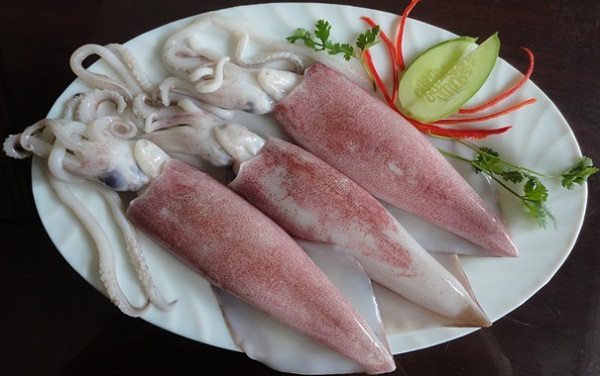
To date, Hoai Phuong has over 100 year experience in making squid ball. The owner - Mr. Dang Manh Hiep shared that to be a professional squid ball maker, you must be clever, meticulous, and hardworking. The very first step to make a nice dish of squid ball is selecting the squids. We should choose the squid with fresh and thick carapace on the back with a weight of around 0.8 to 2.0kg.

It is very scrupulous to “operate” the squid, too. We need to omit the bowel and the vesicle, remove all the skin. We should keep the fin on the two sides of the squids because this part would create the crunchy taste after cooked. Then, wash them with the water and slice them into pieces.

If we want the squids to be crunchy and fragrant, we should grind them in a stone mortar by our bare hands. Put the squids into the mortar one by one. It is recommended that we should not make them well kneaded, especially with the fins. In that way, the squid would be stickier and some parts that are not well grinded yet will turn to be very crunchy when you eat. When grinding, add some peppercorns to make them mix steadily with the squid meat because later the squid would stick very hard.

After that, adding some chopped onion, a little bit fish sauce and some spoons of liquid lard and mix them continuously in about 2 minutes.

Depending on the liking of each person, we can create different shapes for the squid ball. However, you should remember to prepare a bowl of water and put a little oil on your hands to prevent them from being sticky with the squid. Using a spoon to take a little squid and then put it in your hands, roll it into a ball and press it.

To fry the squid ball, we should use a sunken pan. Pour the oil into nearly half of the pan. Keep the oil hot, then lower the flame and fry the squid ball. Turn the balls over steadily; keep the flame in a medium level, not too strong, not too weak. When they turn into yellow, take them out and put them on the grill to keep them dry (if not the balls would be very greasy).

Tourists are buying squid ball at Thoan squid ball store.( in Ha Long I Market, Ha Long city)
Squid ball using with sticky rice has already become a famous specialty of the people of Quang Ninh. In Ha Long, there are even chains of street where people specialize in making this dish.

Hiep added that during the tourism season, an average of 70-80 kg of squid ball is sold on regular days and 100kg on peak days. The customers are mainly tourists from Hanoi, Thai Binh, Thai Nguyen...They buy squid ball to give their relatives and friends as a special present from Quang Ninh. Travel to Vietnam

Pham Thi Giang- a tourist from Thai Binh province commented that Ha Long squid ball is a very delicious and unforgettable dish. It can be served with white sticky rice, Cuon cake and fish sauce with pepper. It costs around VND 350,000-370,000/kg.
Ha Long Squid Ball
Ha Long Squid Ball

There are 30 units specialized in making and selling squid ball within Ha Long city; of which 23 units based in Ha Long I market and 7 in Ha Long II market) under a wide range of well-known trademarks such as Thang Hue, Hien Nhung, Tien Chuyen, Kim Thoa, Thoan, Lan Diep, Hoai phuong... Squid ball is also made in hotels, restaurants.... Paradise CruiseJasmine Cruise

It is reported that the Ha Long City People’s Committee is considering and drawing geographical indication for Ha Long squid ball. The promotion Halong squid ball product helps to enhance its competitive advantage in the market, protecting its reputation and prestige. This is a good opportunity to introduce this specialty to the national and international market.

Thứ Sáu, 31 tháng 10, 2014

Nhung của hươu nào tốt?

Nhung hươu sao thuộc loại tốt nhất trong những loại nhung của các loài hươu nai. Theo Tây y, nó có tác dụng tốt trong việc bồi bổ sức khỏe, nâng cao thể lực và điều trị các bệnh về thần kinh, tim mạch, tiêu hóa, bài tiết, sinh dục, hàn gắn các vết thương bên trong cơ thể.
Có tác dụng tốt đối với toàn thân, nâng cao năng lực làm việc, giúp ăn ngủ tốt hơn, giảm hiện tượng mệt mỏi, lợi niệu, tăng nhu động ruột và dạ dày, ảnh hưởng tốt đến quá trình chuyển hóa các chất protein và glucid. Chú ý không nên dùng cho người có tiền căn cao huyết áp, tiêu chảy, hẹp van tim, viêm thận...
Thường người ta lấy nhung ở những con hươu giống, nai giống sống hoang dã do săn bắn được (loại này được coi là quí và đắt nhất).
Nhung của hươu nào tốt?

Tuy nhiên vì nhu cầu về nhung nai ngày càng cao trong khi nguồn hươu nai tự nhiên cạn kiệt dần (hoặc có khi săn bắn không đúng lúc nhung đúng tuổi khai thác) nên người ta đã nuôi hươu để lấy nhung và chứng minh nhung của hươu nuôi cũng tốt không kém hươu sống hoang dã.
Ðiều này đã góp phần quan trọng trong việc tìm lối ra cho nhu cầu lộc nhung ngày càng tăng của con người, đồng thời bảo vệ được nguồn hươu nai hoang dã không bị tuyệt chủng do săn bắn.
Tuy ở Việt Nam việc nuôi hươu chưa phổ biến nhưng cũng đã xuất hiện ở các vùng Hương Sơn - Hà Tĩnh, Quỳnh Lưu - Nghệ An, một số nơi ở Tây Nguyên, vườn quốc gia Cúc Phương, đảo Cát Bà, An Giang...
Ngoài ra còn có các sản phẩm nhung hươu nhập từ các quốc gia có nền nông nghiệp phát triển cao như New Zealand và các quốc gia ôn đới.

Mekong delta nightlife

The Mekong Delta was an ancient Khmer territory. The area was mostly marshland and forest. When the Nguyen Lords took control of this region, a series of canals were built and a system of transportation was implemented in the maze of water ways in the area. with Song Xanh cruise

The Mekong Delta is divided into 9 provinces: Long An, Tien Giang, Ben Tre, Dong Thap, An Giang, Vinh Long, Kien Giang, Hau Giang and Minh Hai. The people in this region are made up of Vietnamese and some people of Khmer, Chinese and Cham origin. This accounts for the variety of religions that add to the cultural diversity of this area. Among the religions practiced here are: Buddhism, Catholicism, Cao Dai, Hoa Hao and Islam. Mekong delta tours

Life in Mekong Delta

The southwest region of Vietnam is known for the vast rice fields and the huge plantations that make up the core of this region's economy. The region is also known for the many miles of waterways criss-crossing the land making this area both fertile and unique. South Vietnam tours
Mekong delta nightlife

The people living in the Mekong Delta make their living as farmers and fishermen.

Often, they live right on the edge of the rivers or canals on various structures built from whatever materials found. Consequently, the architecture along the delta varies from place to place.

Often, many homes have fisheries right under them. Enterprising individuals build a cage like structure of bamboo beneath their homes on these waterways to house fishes. As the fishes grew, they sell the whole batch to processors from the city and start with new ones.

Life in the delta is tightly woven with its rivers as daily activities and businesses are conducted on its banks. Markets, stores, ship yards, repair shops are some of the more popular trades.

A homestay among the people of the Mekong Delta is an unforgettable experience and can give you a unique insight into the day-to-day lives of the local people. The bulk of the local people here make their living from growing fruit or cultivating rice.

Many of the homes that are open to Western visitors are on the banks of the Mekong River. When you reach the home of your host family, you should remove your shoes. Most families also prefer women to be well covered up.

In traditional houses, the sleeping area is open plan and has hammocks and wooden beds with mosquito nets hanging overhead (before the last rays of the sun disappear slap on plenty of repellent, as mosquitoes are rampant throughout the area).

A typical supper is the local favourite, elephant-ear fish, served beit upright on a bed of greens with flourishes of carrots shaped as water flowers. The flesh of the fish is pulled off in chunks with chopsticks and wrapped into a rice-paper pancake and dipped into sauce. This is accompanied by crispy spring rolls, followed by soup and rice (Mekong rice Is considered the most flavoursome).

After dinner some families exchange stories and songs over bottles o( rice wine long into the night, while others cluster around the TV.

The morning starts as the first lights flicker across the water. Before breakfast, everyone takes a bath with the family. Splashing around in the muddy Mekong, fully dressed, can leave you feeling dirtier than when you started! After a hearty breakfast you say your goodbyes and head back to Vinh Long via the floating market.

Thứ Tư, 22 tháng 10, 2014

Yen Duc Village

Yen Duc Village is about 60km to the west of Halong Bay on the way from & to Hanoi. Besides the Halong Bay cruise trip, on the way from Halong Bay to Hanoi, you can consider a short trip to Yen Duc Village – a typical Vietnamese agricultural village which is rich in culture and traditions. Yen Duc village is a beautiful village in the North of Vietnam, the village has immense rice fields, Kinh Thay river,  many ponds, gardens in the local houses. The local life is kept away from noisy outside. Yen Duc Village has many historical monuments and a famous ancient pagoda named Canh Huong which contains cultural and historical values dated back to Ly and Tran dynasty in the village, all the alley roads are very clean with unique stone walls, especially the local villagers are very friendly, honest and extremely hospitable. Visit Halong Bay with V'spirit cruise Halong bay

At the moment, there are 3 tour options: 2 hour tour; 3,5 hour tour ( with lunch) and 5,5 hour tour ( with dinner). The 2 hour tour and 5,5 hour tour option will be suitable for Halong Bay cruises which check out at 12:00 to arrive Yen Duc village at 2:00pm while 3,5 hour option will fit the  cruise check out time at 10:00 from Halong Bay to arrive Yen Duc at 12:00 for lunch. If you have time, the 5.5 hour tour can be a good extra experience awith gardening, fishing and a dinner in the village. It is 1,5 hour driving to the village for this tour then 2 more hour to Hanoi. Read more Halong Bay map

V'spirit cruise Halong bay

Joining a trip to Yen Duc village is a great chance to visit the charming fields, a holy pagoda, a historical site and other relic sites while wandering narrow alleyways in the odorous fresh air and talking with hospitable local people. With a convenience graphic location, Yen Duc Village is a good link with unique experience for the customers after Halong Bay cruise.


Yen Duc village is in Dong Trieu town and 60km West of Halong city. The village was recognized as a national relic in 1993.

Yen Duc is a beautiful village with poetic scenery, charming rivers, historical mountains and sacred legends and relics related to Ly and Tran dynasty.

Considered as a “Stone wall” under the war, the village was a cradle of revolutionary movements with many brave, ingenious heroes and local people sacrificed to protect their hometown. Over the years, their names are still alive together with each famous mountain, river and pieces of land here.

Similar to other rustic countryside, the local people here are very diligent, gentle and optimistic.

Currently, Yen Duc village is one of the few villages in the Delta still retain traditional agricultural features and beauty with the golden rice fields in harvesting time, the gardens of area trees in the sun and the ponds below the green gourd platforms.

Thứ Tư, 15 tháng 10, 2014

Kayak in Halong Bay

Halong Bay attracts thousands of passengers every month. Nearly five hundred cruises run every day and hundreds of passengers stay on board every night.
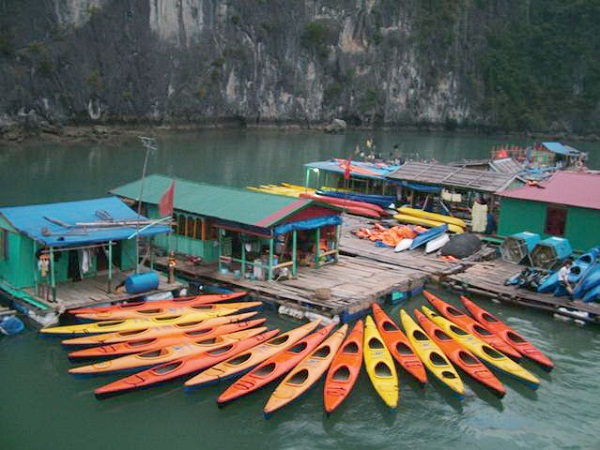
Halong Bay is famous for its natural beauty and thousands of limestone islands and islets.When you are on board, you admire the majestic beauty of the Bay but when you GET closer to the limestone islands, discover the beauty yourself, you admire its nature. But… how to get closer? The best way is joining kayaking activity. Halong bay tours

Kayak in Halong Bay?
  • This is a small, relatively narrow, human-powered boat primarily designed to be manually propelled by means of a double blade paddle.

How to use a kayak?
  • Kayaking is generally assumed to be very safe in these calm waters of Halong Bay but there is still some areas and warning that you should avoid and listen to the tour guide. Kayaking is not difficult; however, to enjoy it completely, you need some tip: 
  • Paradise Cruise

  • Jasmine Cruise

Preparation do not skip this stage
  • Suitable clothes: T-shirt and short, swimming suit in the summer; warm clothes in the winter; wet shoes, hat, sunglasses
  • Necessary things: Water, sun cream, dry bag, camera, insect repellent
  • Life vests
Medical box and food (for the long duration)
  • Follow your tour guide: it is very important
  • Listen to the route, time and rules
  • Learn how to use the kayak even it is not your first time kayaking, wear the life vest and use the dry bag
  • Strictly follow the leader (tour guide) about the moving rules
  • Check with your tour guide the weather, tide and wind strength to have the best and safest route.
  • Keep a suitable distance with the others, not too far, keep in sight with the others
  • Keep away from the places which have strong flow, against the wind; take advantage of the wind strength and flow.
What about the children?
  • Follow the tour guide and their parents
  • Sit still in the kayak, do not move in front of or behind
  • Wear the life vest
  • Wear the hat and sun cream
Handle unexpected situations:
  • Adjust the speed of the whole group if any of the member is out of sight
  • In case the kayak capsizes, passengers need to swim a bit, and then take the water out of the kayak with the help of the tour guide. He will catch thekayak; take the water out by putting your kayak on his in the T- shape. After that, he will put the kayak back into the water; keep it still so that passengers can be on the kayak again.
  • If there is an expected storm, find the safest place in the sheltered areas, beaches… to avoid the storm. In case passengers are in the middle of the sea and cannot find a safe place, passengers need to be gathered to make a raft
  • If you are not sure about the route you are going, you should keep in touch with the others and paddle around the mountain, you will not be lost. Passengers should know for sure the route, search on the map.
  • It is better if passengers have mobile phone, radio or any means of communication (often for professional kayakers)

Thứ Năm, 9 tháng 10, 2014

Hon Chong travel guide

Whatever the tourist brochures tell you, Hon Chong is not the Halong Bay tours of the south -- it is as simple as that.

A few rock pinnacles and limestone karsts do not a Ha Long make.

That doesn't mean that it isn't a worthwhile destination in its own right, however. A welcoming seaside village set on a rugged coastline, Hon Chong makes for a decent R&R stop on any Mekong tour. This is especially the case if you're headed towards Cambodia for the overland crossing with Kep. Read more: V'spirit cruise Halong bay

Though it sees a flood of Vietnamese holidaymakers around Tet, it can feel practically deserted for the rest of the year, making it the ideal locale to lay back in a hammock and unwind.
Hon Chong travel guide


Though the town's sole road fronts along a lovely pine-tree fringed beach, the swimming in Hon Chong isn't very good. The sand is too slimy, and the water too shallow -- those fisherman walking 20m from shore? They aren't on stilts. Read more: Vietnam tours

But the sand is still great for getting some sun, or enjoying a seafood lunch. You feel more active than this, the Chua Hang Grotto makes for a worthwhile afternoon out.

Orientation
Hon Chong consists of only one beachfront road, along which all the town's hotels and restaurants are located. There is no hospital, bank or post office here, though on a good day, Ha Tien is only a few hours away over a dreadful road.

Internet doesn't seem to have quite made a splash in Hon Chong yet. For the moment, An Hai Son Resort has WiFi available in their restaurant, and you may be able to convince them to let you use one of the computers in their office.

Thứ Ba, 23 tháng 9, 2014

Travel Bai Tu Long Bay

Bai Tu Long Bay is a beautiful bay of the Gulf of Tonkin, in the northeastern Vietnam. It belongs to the territory of Quang Ninh Province and about 200 kilometers far from Hanoi, the capital city of Vietnam - Vietnam travel
Legend said it that in the early era of Vietnam, the country had to fight against powerful invaders. To help Vietnamese people save their country, a family of dragons was ordered by the god to assist them. Dragons spitted out various jewels and jades to form a long and solid citadel. Therefore, the invaders had to give up their invasion plot and sailed their ships back. After the war, the family of dragons stayed on the Earth as beautiful and peaceful scenery there. The bay, where the mother dragon descended, was named Halong bay (Dragon Descending Bay). And the bay where the dragon’s children descended was called Bai Tu Long Bay. Nowadays, variety of islets on Halong Bay is said to be petrified jewels and jades that the dragons spitting out. The island range of Bach Long Vi is considered as the trail of dragon’s tail on the sea. Read more: halong bay tours

Bai Tu Long Bay comprises hundreds of islands in both big and small sizes. They belong to two types: lime-stone islands and schist islands. The islands of Bai Tu Long are the result of tectonic process over 300 million years. Many of them are well-known tourism islands such as Quan Lan Island, Minh Chau Island, Ngoc Vung Island, and The Vang Island. Karst corrosion process and weathering created several amazing caves, especially Quan Cave (Navy Cave).  Read more: Indochina Sails cruise Halong
Travel Bai Tu Long Bay


Bai Tu Long Bay has a rich biodiversity with typical ecosystems: mangrove ecosystem, coral reef ecosystem, ecosystem of tropical forests. It is home to various species of flora and fauna. There are 780 species of flora in Bai Tu Long Bay and 21 species among them are included in the list of Vietnam’s Red Data Book. Scientists also found 931 species of aquatic animals there. In 2001, Bai Tu Long National Park was established with the area of 14 ha in order to preserve biodiversity in this region.

Bai Tu Long Bay has the total population of 30.000 people whose livelihoods depend mainly on farming and fishing. On Bai Tu Long, there remain many archaeological relics of Halong Culture (dating around 3.000 – 2.000 BC) and historical trails of the ancient Van Don commercial port (in 13th century).

Thứ Hai, 15 tháng 9, 2014

Ben Tre travel guide

Ben Tre province is made up of three main islands wedged between the Tien Giang River to the north and to Co Chien River to the south with the Ham Luong River running straight down the centre. All are effectively offshoots of the Mekong River cruise as it splits out into many fingers before spilling out into the South China Sea.

Famous for its coconut desserts, the province is suitably covered in coconut trees. During the war these coconut trees were used to make coconut oil which was then used as a valuable substitute for kerosene. Read more: Travel South Vietnam

Verdant and flat, the province is mostly given over to rice and fruit cultivation, though being an island province, fishing is another mainstay of the local economy. Traditional Mekong life is the norm here and it's a very unadulterated scene -- wandering the market, sipping the coffee, doing a boat trip and skipping through the local museum are the main pastimes.
Ben Tre travel guide


As far as exploring the Delta is concerned, Ben Tre is a dead-end province. Once you've experienced all the province has to offer, you'll need to turn around and head back through My Tho to get any further into the Delta. That's not to suggest it isn't worth visiting -- it is. For starters you can do boat trips from here for a fraction of the price of a trip from My Tho (either organised through Ben Tre Tourist, or via the boatmen at the pier) and, with its large network of minor canals, there's a lot of scope for riverine exploration. There's also a small museum and a pleasing riverfront worth investigating. Mekong Eyes cruise

First things first -- Ben Tre town is clean -- it's as if somewhere between the My Tho ferry crossing and downtown you pass through a cleanliness vortex -- the roads are spotless, the pavements are tiled and smooth and there's little refuse -- even in the market.

Secondly, there's not really all that much to do in Ben Tre. There's boat trips, a pagoda, a small museum, a good market and lots of friendly people, but overall there's not enough here to justify a stay of more than a night or so.

The main advantage of coming here is that the boat trips are far cheaper than in My Tho and you can pretty much visit the same spots. If you're on a budget, Ben Tre is a far better base than My Tho -- it's a pleasant enough place, with a small town charm, that makes it an allround reasonable spot for those with enough time on their hands to dawdle slowly through the Delta.

Thứ Sáu, 5 tháng 9, 2014

Halong Alova Gold Cruise review

Halong Alova Gold Cruise are featured tour services of Go Asia Travel providing overnight cruise for Halong Bay Visitor. 
Alova Cruise – a Vessel consists of 9 luxury cabins decorated in classic Asian style is the best choice for discovering Halong bay .Being launched in Nov.2011, Alova Gold Cruise was designed and built for the couple; family and small group with the most convenient itinerary, comfortable restaurant, luxuriant room as well as exciting bar. Besides, with professional, skilled staff and a Dutch manager, we commit to satisfy all the guests even the strictest ones! Package tours can be in two or three days depart from Hanoi at 8. A.m or from Halong bay tourist wharf at 12.P.m.  Read more: 
Calypso Cruise Halong bayImage Cruise Halong bay
Halong Alova Gold Cruise review

On Alova Gold Cruise you can get:
- Luxury cabin with Air con, en-suite Bathroom, Hairdryer and slippers
- Kayaking and Swimming equipment
- Welcome drinks
- Entrance and sightseeing fees
- English speaking guide
- Meals on board: (lunch, dinner and breakfast) – Complimentary bottled water
- Cooking demonstrations
- Visiting fishing village by tender
- Dining Room and Sundeck
- Entertainment Activities and Bar Happy Hour
- Safety Facilities and First-Aid Equipment
Harmonious Asian style! That’s is the way we create an unconventional sail in order to bring a world of most comfort and romance for all the tourists – who are indeed luckily to have the chance coming to one of the most unique & spectacular beauty of the world –  naming Vietnam’s  Halong Bay!
The cabins are designed and fitted domestic & international standards, characterizing by wooden décor with high – large windows that allow opening the further view around the bay. The bedrooms are designed with luxuriant fine caved patens taking care of your sleep.
  
Cabin Amenities
- Individually controlled Air-Conditioning Wardrobe
- Hot and Cold Shower Complimentary Bottled Water
- Toilet Slippers
- Toiletries Fire Extinguisher
 
Sundeck
The sundeck with universal space & pure atmosphere will surely impress the strictest ones!
With fine architecture of the harmonious combination dotted with green trees together with scientific arrangement as
+ The room under the roof focuses on aesthetic with fresh air & buoyant weather and is a reasonable place for relaxing & drinking
+ The outdoor space is full of sunshine & sea wind becoming inevitable part for sunbathing & reading.
To snap a series of great pictures - Just a kick! The entire Halong Bay immediately appears in your eyes. You can enjoy an exotic cocktail or take a look over the mild beauty of heaven mixed with yeast creating a new source of your inspiration.

Chủ Nhật, 31 tháng 8, 2014

Chọn máy tiết kiệm điện

Chọn máy tiết kiệm điện

Hiện nay trên thị trường có 2 dòng máy điều hoà giá rẻ là máy thông thường và máy biến tần.

Máy thông thường là máy nén kiểu đóng ngắt ON – OFF, khi điều chỉnh năng suất lạnh và nhiệt độ phòng. Đặc điểm của loại máy này là nhiệt độ trong phòng dao động mạnh, máy làm việc theo chu kỳ đóng ngắt và tiêu thụ điện năng tương đối cao.

Máy biến tần là loại máy mới, hiện đại, điều chỉnh năng suất lạnh và nhiệt độ phòng bằng cách thay đổi vòng quay trục khuỷu máy nén. Nhờ cách điều chỉnh này cũng như nhờ thay động cơ xoay chiều bằng động cơ một chiều, ống mao bằng van tiết lưu điện tử... nên tiêu tốn điện năng có thể giảm tới 50% so với máy thông thường.
Chọn máy tiết kiệm điện


Tất nhiên giá máy này cũng đắt hơn khoảng 30%. Tuy nhiên, giá đầu tư ban đầu cao hơn, nhưng sẽ nhanh chóng được bù lại nhờ giá vận hành giảm và vòng đời của máy cao (khoảng 13 năm).

Nên chọn loại điều hòa tủ đứng chính hãng biến tần để tiết kiệm điện năng.
Chú ý khi lắp đặt điều hòa

- Phòng phải được hút bụi, làm vệ sinh sạch sẽ, tường và trần nhà thường được lau rửa. Ngoài ra, cần lưu ý lắp đặt điều hoà ở vị trí sao cho dòng không khí có thể được phân phối đều khắp phòng. Trong phòng bạn cũng nên để một chậu nước mát.

-  Không để dàn nóng của điều hòa âm trần chính hãng bị ánh nắng chiếu vào và tránh để dàn nóng bị cản gió. Hướng đặt dàn nóng tốt nhất là hướng bắc hoặc hướng nam. Nếu lắp đặt ở hướng đông hoặc tây thì nên có mái che để che nắng, mái che này không được cản trở luồng gió lưu thông qua dàn nóng.

- Dàn lạnh nên được lắp ở vị trí hợp lý để có thể tỏa lạnh đều trong phòng và đường gió ra không bị cảm trở bởi các vật dụng khác.

- Lắp đặt dàn nóng và dàn lạnh càng gần nhau càng tốt, độ chênh lệch giữa 2 dàn càng nhỏ càng tốt. Như vậy sẽ tiết kiệm điện hơn.

- Phòng lắp máy phải khô ráo với độ ẩm tốt nhất từ 30% đến dưới 60% để các loại vi khuẩn, nấm không có điều kiện phát triển.

Cách chọn và sử dụng điều hòa để tiết kiệm điện năng - Ảnh 2
Vệ sinh sạch sẽ phòng trước khi nắp điều hòa.
Điều chỉnh nhiệt độ vừa phải

Chỉnh nhiệt độ càng thấp, máy lạnh tiêu thụ điện càng nhiều hơn. Chỉnh nhiệt độ tùy vào khả năng thích ứng của mỗi người. Tuy nhiên, nếu nhiệt trong phòng chênh lệch quá lớn so với bên ngoài là điều không có lợi cho sức khỏe.

Theo khuyến cáo chỉ nên chênh lệch dưới 10 độ C (tốt nhất là 7 độ) và không nên dưới 20 độ C. Ví dụ nhiệt độ ngoài trời là 36 độ, nhiệt độ trong phòng nên đặt ở mức 26 - 28 độ. Bạn có thể sử dụng thêm quạt điện, như vậy sẽ đạt hiệu quả cao và tiết kiệm điện.

Nếu máy không có chế độ ngủ, hãy tăng nhiệt độ phòng thêm 2oC, nếu cảm thấy nóng lúc đầu, hãy bổ sung thêm quạt trong vòng 1h. Không đặt nhiệt độ thấp đến mức phải nằm đệm và đắp chăn khi ngủ.

Hãy tắt máy điều hoà khi ra khỏi phòng, tắt bằng điều khiển từ xa, sau đó ngắt áp tômát. Nếu chỉ tắt bằng điều khiển máy vẫn tiêu thụ khoảng 15W.

Cách chọn và sử dụng điều hòa để tiết kiệm điện năng - Ảnh 3
Hãy tắt máy điều hoà khi ra khỏi phòng, tắt bằng điều khiển từ xa, sau đó ngắt áp tômát.
Chỉnh hướng gió

Ở máy lạnh có những cánh để điều chỉnh hướng gió sang trái hoặc phải, hướng lên trên hoặc xuống. Do ảnh hưởng độ quay của quạt và vị trí của các ống dẫn hơi lạnh bên trong, nên đa số máy điều hòa nhiệt độ đều có xu hướng thổi hơi lạnh nhiều hơn về một phía của phòng. Bạn nên điều chỉnh hướng thổi lạnh vào khu vực cần thiết của phòng (giường tủ, bàn làm việc...). Từ đó, có thể chỉnh nhiệt độ ở mức tối ưu nhất.

Thường xuyên vệ sinh máy

Các bụi bẩn bám và tích tụ vào bề mặt dàn nóng, dàn lạnh, lưới lọc... làm trở ngại cho việc trao đổi nhiệt, làm máy chậm lạnh. Việc vệ sinh dàn nóng, dàn lạnh ở máy lạnh hơi phức tạp và có liên quan đến an toàn điện.

Bạn có thể nhờ thợ điện lạnh bảo dưỡng định kỳ (khoảng 6 tháng/lần). Còn lưới lọc bụi, vệ sinh dễ dàng hơn, khoảng một tháng/lần. Bạn có thể tự làm, tháo ra và rửa sạch bằng bàn chải và xà bông.

Thứ Ba, 26 tháng 8, 2014

Food Halong - Ngan

Food and drinks are two of the best parts of Halong, and it could be regretful if travelers cannot taste some of those. Here we introduce many of the best dishes and beverages at the bay, which are symbols of eating culture of Halong Bay. The information is not only what is the dish, how is made and what is made from, or how tasty is it with unique flavor, but also how to enjoy them in the best way, or what make these dishes special. Moreover, we also suggest where travelers should come to taste the dishes, as well as some tips in case that tourist wants to cook that food by their own hand. For the drinks, we recommend some places to purchase them with ensured quality and good price, and also some of cautions for drinkers to use those beverages in a completely safe way. Travel Halong with : Indochina Sails cruise Halong bay, Halong Paradise cruise, Halong Violet cruise 
Violet cruise halong bay
 
Ngán is a mollusk species which is popular in the Northern Vietnam coastal area. Although it can be seen along the coast of the country, Quang Ninh Province, Halong City is where this seafood gets its fame.
This special sea animal has a similar shape to clam, one of its more popular relative but it is usually a little bigger than clam and also has rougher shells. While in the water, ngán uses its one and only tentacle to crawling around, breathing, and seeking for foods. During the season of ngán, fishermen living in the bay have to wade deep into the mud in attempt to hook up this rare sea animal.
In Vietnamese, the word “ngán’ literally mean “bored” but if you have a chance to have just one bite of it, the deliciousness of ngán would stay in your mouth for the rest of your life.
Amongst all dishes made from ngán, the most favorite and famous one is ngán wine which is made by opening the shells of ngán then letting its blood flow directly into the strong liquor. If you worry about the fishy smell of fresh blood, fear not, because it can be boiled before serve. Ngán blood wine is most preferable by male gourmet thanks to its miracle effect of improving male sexual ability.
Besides, ngán is best enjoyed when grilled or steamed. While it is being steamed, the chief usually tie up its shells in order not to waste the juice and the blood inside, which are the most nutritious parts. Grilled and steamed ngán both have salty taste at the beginning then turning into sweet taste of seafood and this deliciousness stays in your mouth till the next time you taste. Ngán porridge is an excellent choice for breakfast or for a happy ending for your lunch or dinner in Halong. With just only two to three pieces of ngán, your bowl of porridge would become more alluring than ever.
Visiting Halong, you may have many more chances to taste other attractive variables of dishes from ngán like ngán sushi, ngán salad, ngán soup, deep fried ngán with vegetables, etc. You should not miss the chance to feast on this unique seafood when you come to Halong Bay.